

JOAQUIN CLAUSELL SEMBLANCE
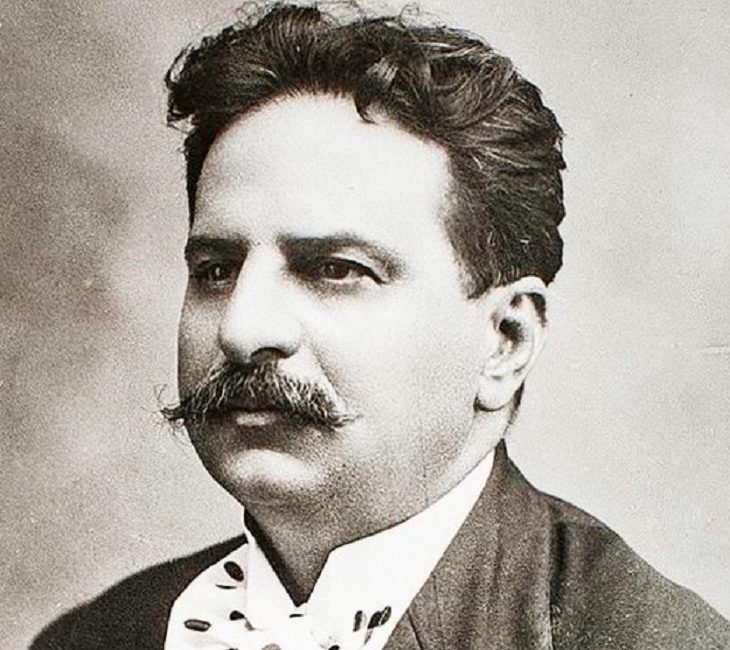
Joaquín Clausell, a self-taught painter who adopted the formal foundations of Impressionism to offer his interpretation of the Mexican landscape, is being commemorated 155 years after his birth by the Ministry of Culture of the Government of Mexico and the National Institute of Fine Arts and Literature (INBAL), through the National Museum of Art (Munal), as part of the «With You in the Distance» campaign.
The artist, who was born on June 16, 1866, in Campeche, learned to draw at a very young age. In 1883, he was expelled from the Campechano Institute, where he attended middle and high school. At the age of 20, he moved to Mexico City, where he enrolled at the National School of Law.
His landscapes, enriched with a multitude of colors, highlighted his unique vision of the effects of light on contours. He was a self-taught painter and one of the pioneers of Impressionism in Mexico. His work is dominated by vigorous forms, a strong emotional charge, and the use of pure colors.
Due to his political views, he was exiled, so he traveled to Europe, where he took the opportunity to explore Impressionism, a style he developed beginning in 1904 under the influence of the painter Gerardo Murillo, Dr. Atl, with whom he revived landscape painting in Mexico.
His notable works include: Sprouting Fountains in Autumn; Sprouting Fountains (with Figures); Sprouting Fountains (Blue Forest); The Red Wave; Path to the Forest; Canal; The Pedregal; Santa Anita Canal; Seascape; Green Cloud; and Landscape, among others.
Joaquín Clausell, pintor autodidacta que adoptó las bases formales del impresionismo para ofrecer su interpretación del paisaje mexicano, es recordado a 155 años de su nacimiento por la Secretaría de Cultura del Gobierno de México y el Instituto Nacional de Bellas Artes y Literatura (INBAL), a través del Museo Nacional de Arte (Munal), en el marco de la campaña “Contigo en la distancia”.
El artista plástico, quien nació el 16 de junio de 1866 en Campeche, aprendió a dibujar a muy temprana edad. En 1883 fue expulsado del Instituto Campechano, donde cursó la secundaria y la preparatoria, por lo que a los 20 años de edad se trasladó a la Ciudad de México, en donde ingresó a la Escuela Nacional de Jurisprudencia.
Sus paisajes enriquecidos con una gran cantidad de colores, destacaban su visión particular sobre los efectos de la luz en los contornos. Fue pintor autodidacta y uno de los pioneros del impresionismo en México. En su obra predominan las formas vigorosas, una fuerte carga emocional y el uso de colores puros.
Debido a sus ideas políticas fue desterrado, por lo que viajó a Europa, y ahí aprovechó para conocer el impresionismo, estilo que desarrolló desde 1904 por influencia del pintor Gerardo Murillo Dr. Atl, con quien renovó la pintura paisajista en México.
Entre sus obras se destacan: Fuentes brotantes, en otoño, Fuentes brotantes (con personajes); Fuentes brotantes (bosque azul); La ola roja, Camino al bosque, Canal, El pedregal, Canal de Santa Anita, Marina, Nube verde y Paisaje, entre otras.

